The Dragon That Landed on a Road
How Sweden — a neutral country with fewer people than London — built one of the most radical fighter jets in history
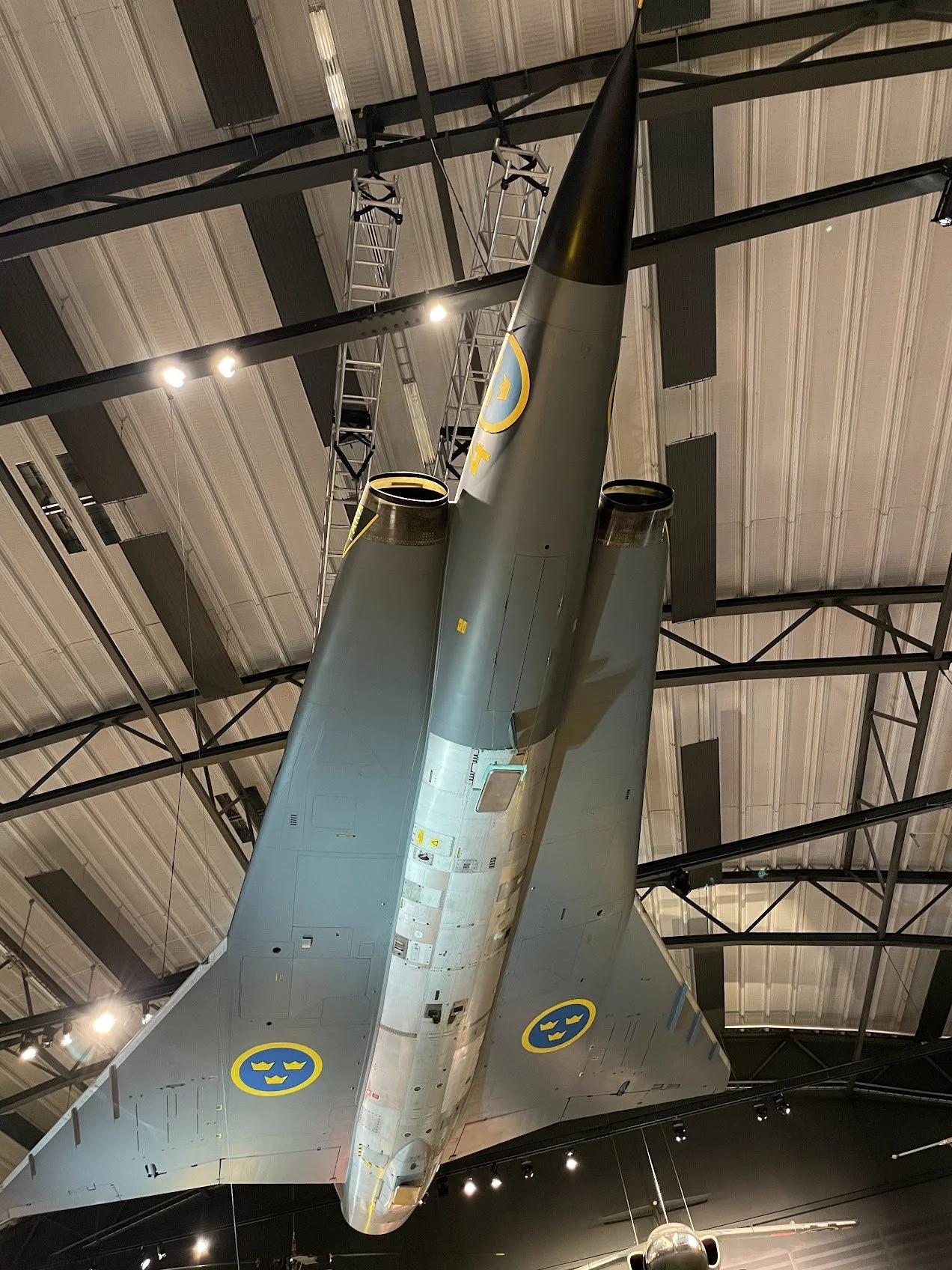
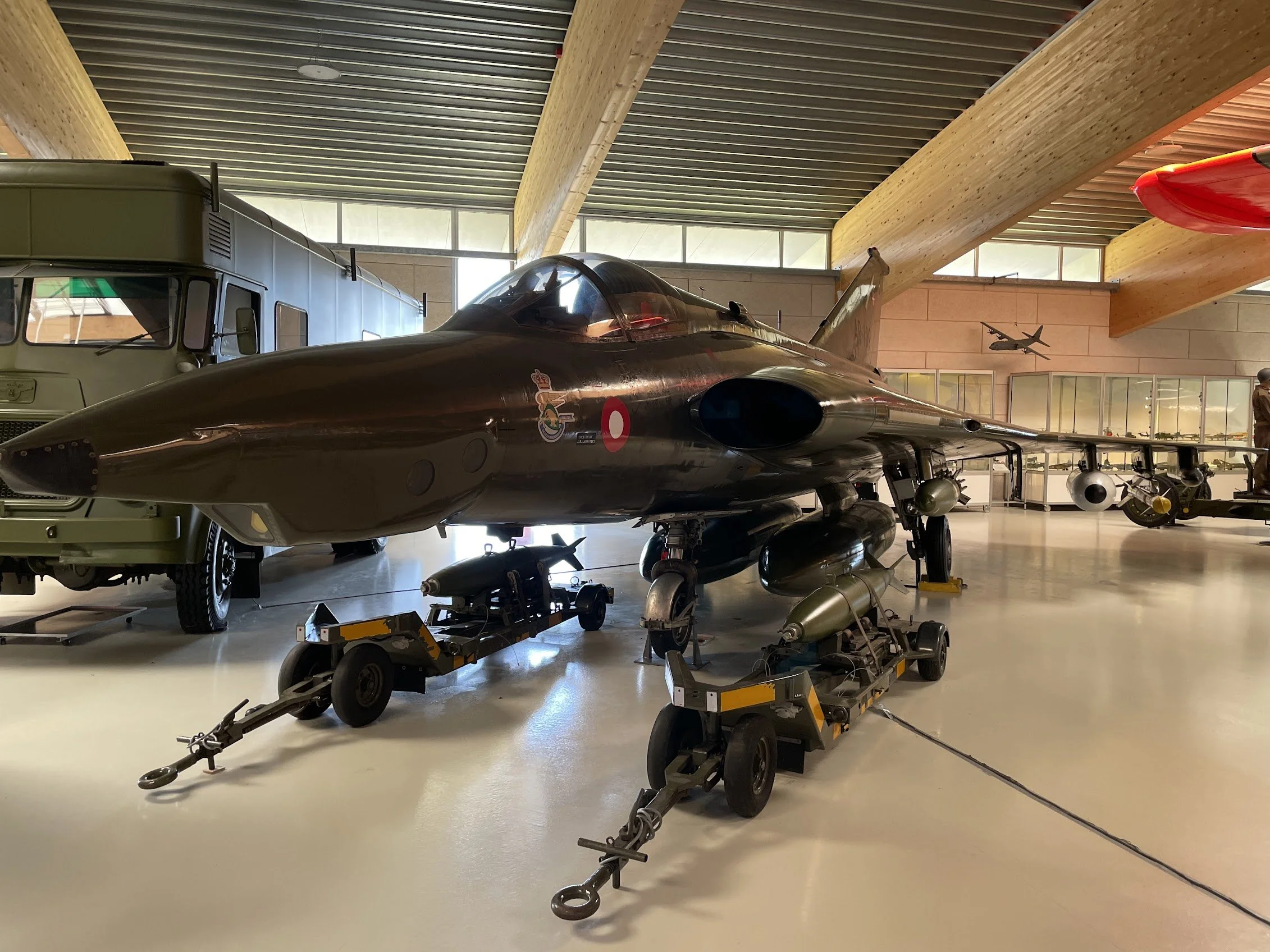
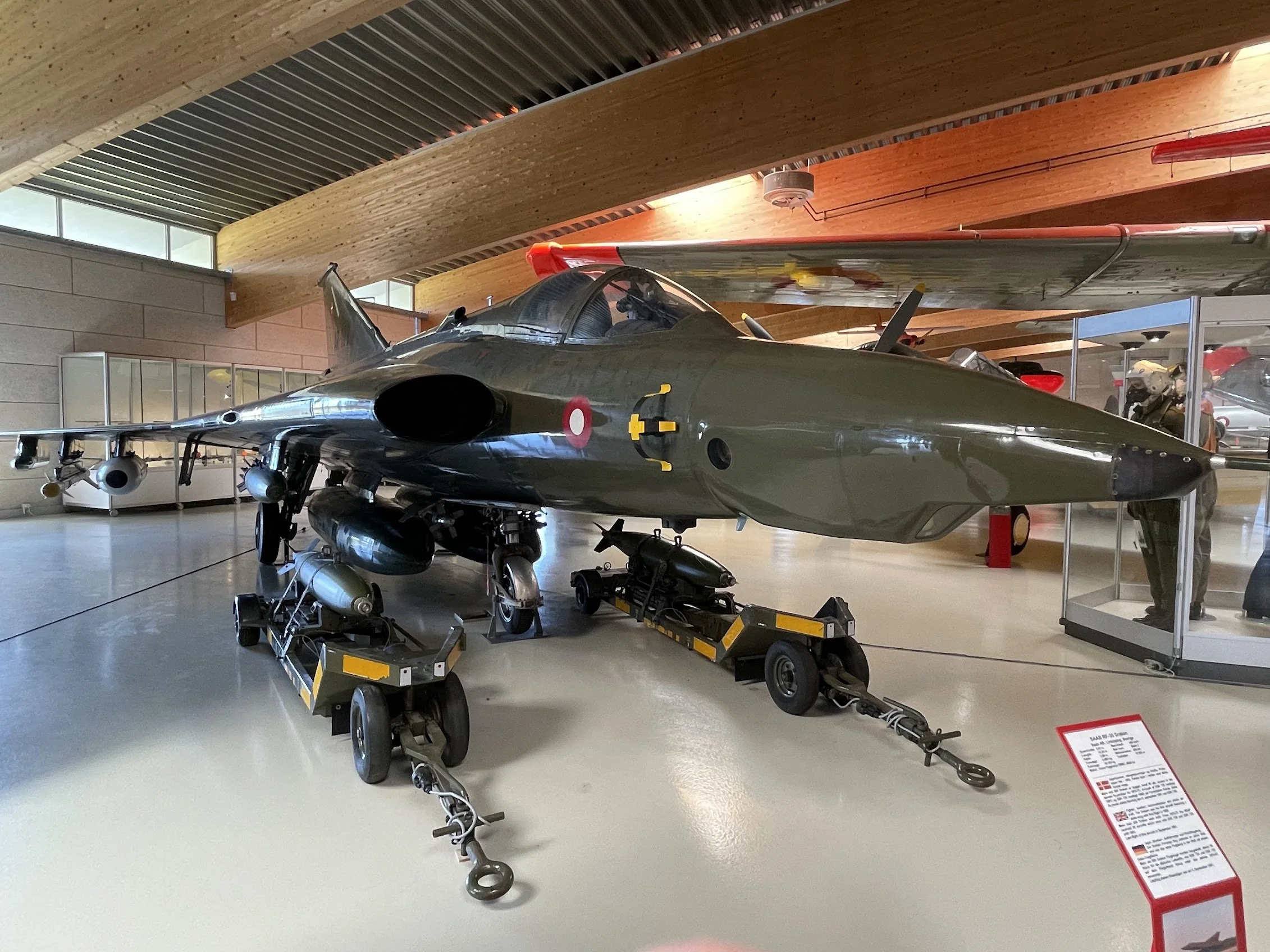
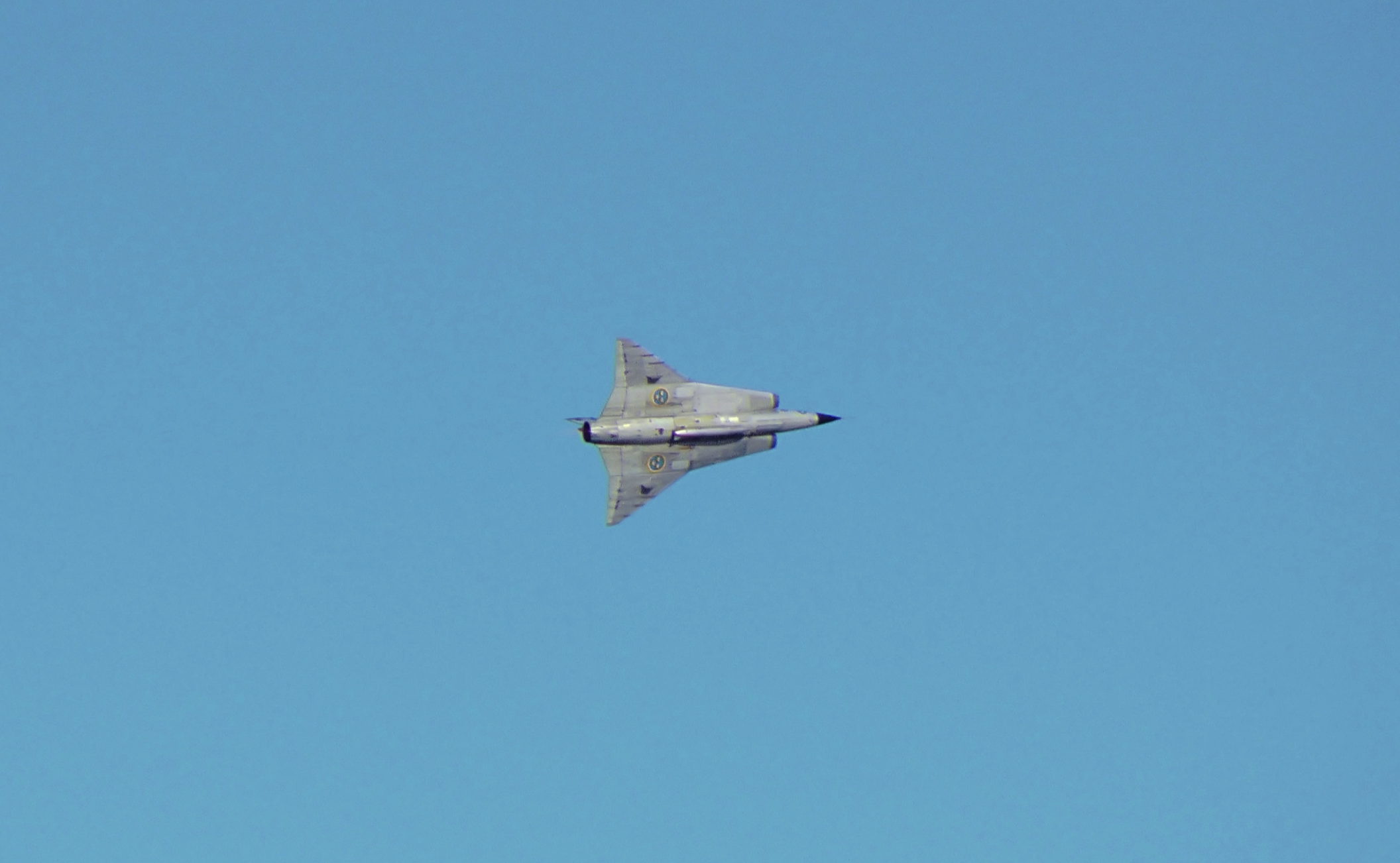
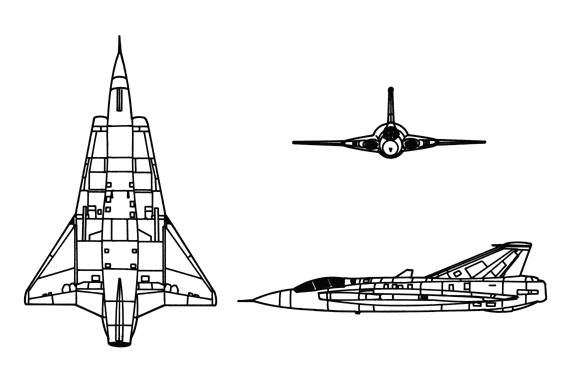
Look at the Saab 35 Draken from above and you'll understand immediately why it's called the Dragon. The wing doesn't just sweep back — it bends, doubling back on itself like a folded paper kite, forming a shape unlike anything else in the sky before or since. It looks less like an aircraft and more like something a graphic designer invented after too much coffee.
But this was no design exercise. Every curve of that extraordinary wing was the answer to a very Swedish problem.
The Problem With Being Sweden
Rewind to 1949. Sweden sits in an uncomfortable spot on the map — squeezed between NATO Norway and the Soviet Union, with no military alliances, no nuclear umbrella, and a long memory of being cut off from supplies during the last war. The Cold War is getting cold fast. Soviet bombers can already cross the Arctic and reach Stockholm in under an hour.
The Swedish Air Force looked at this situation and reached a logical conclusion: they needed a supersonic interceptor. A fast one. One that could climb hard, hit Mach 2, destroy a Soviet bomber, and get home again — all before the enemy even knew it had scrambled.
There were only two problems. Sweden had never built a supersonic aircraft. And nobody was quite sure how to make one work.
Enter Erik Bratt — a 33-year-old Saab engineer who had never designed a supersonic aircraft either, largely because in 1949 almost nobody had. He was handed the project on a temporary basis while they looked for someone more qualified. Nobody more qualified ever arrived, so Bratt just got on with it.
What he came up with would change aviation forever.
The Wing That Didn't Exist Yet
The challenge was brutal: the Swedes needed an aircraft fast enough to intercept supersonic bombers, but also capable of taking off and landing on very short runways — because Sweden's plan was to scatter its fighters across the country, hiding them in forests and launching them from road strips as short as 500 metres, integrated into the public highway system. The assumption was that any conventional air base would be destroyed in the first hours of a war.
No existing wing design could satisfy both demands. Swept wings were fast but needed long runways. Delta wings were efficient but landed too fast. Bratt's team landed on something nobody had ever flown before: the double delta. The inner wing would be sharply swept — almost 80 degrees — giving the aircraft its blazing high-speed performance. The outer wing would sweep back more gently, generating the lift needed for slow, controlled landings on short strips.
The concept was so unproven that Saab built the Saab 210 — nicknamed Lilldraken, the Little Dragon — an approximately 70-percent-scale research aircraft just to see if the thing would actually fly. It first took to the skies in January 1952. During testing, the second prototype unintentionally broke the sound barrier during a climb. That was enough. The double delta worked. Full-scale production was approved.
The first full Draken prototype flew on 25 October 1955. It looked like nothing that had ever flown before. It still does.
The Records Fall
When the Draken entered frontline service with the Swedish Air Force on 8 March 1960, it marked a series of firsts: it was the first fully supersonic combat aircraft designed and built in Western Europe to enter service, and the first to exceed Mach 2 in level flight.
But the most astonishing record came quietly, without fanfare, years before anyone outside Sweden even knew about it. The Draken was the first aircraft known to be able to perform the "Cobra" maneuver — a dramatic, physics-defying move where the aircraft pitches its nose violently upward past 90 degrees, almost pointing straight back at where it came from, before snapping level again. It looks impossible. It weaponises the air itself, acting as a sudden, enormous brake that causes any pursuing aircraft to overshoot.
When Soviet pilots demonstrated the Cobra at the 1989 Paris Air Show in their Su-27, the world went wild. Television crews rushed to film it. Military analysts called it revolutionary. Nobody mentioned that a Swedish jet had been doing exactly the same thing in secret for nearly three decades.
Fighting from the Forest
The Bas 60 dispersed airfield system created approximately 70 small wartime air bases throughout Sweden, including specially prepared straight sections of highway reinforced to handle jet aircraft. The Draken was designed around this requirement, with a takeoff and landing roll of approximately 500 metres — short enough for a highway section between two curves.
Ground crews were conscripts — eighteen-year-olds trained to refuel, rearm and relaunch the aircraft in minutes, then scatter before the next strike arrived. The Draken had to be simple enough for them to service in the dark, in a forest, possibly in winter. So Saab designed it that way. Access panels opened with push-button latches. Everything that needed servicing in the field was reachable without a ladder.
This philosophy — the idea that a fighter jet should be able to fight from a road and be maintained by a teenager with a wrench — was so Swedish, so practical, and so quietly brilliant that it shaped every Saab aircraft that followed. The Viggen did it. The Gripen does it today.
The Dragon Bows Out
Between 1955 and 1974, Saab built 651 Drakens, serving with Sweden, Denmark, Finland, and Austria. The last were retired in 2005 — fifty years after that first prototype took off.
It never fired a shot in anger. Sweden remained neutral throughout the Cold War, and the Draken's job was to make sure it stayed that way — to be visible, credible, and frankly terrifying enough that nobody tested it. By all accounts, it succeeded.
What the Draken leaves behind is something rarer than a combat record: a pure design. An aircraft conceived to solve one specific problem, in one specific country, under one specific set of constraints — and in doing so, accidentally producing something so original, so visually striking, and so aerodynamically ahead of its time that it still stops people in their tracks when they see it in a museum.
Look at that wing. Nobody else had the nerve to build it.
Valentyn Kryvorot is a Ukrainian aviation artist whose hand-drawn aircraft illustrations are available as prints, posters, and custom merch. Browse the collection at valentynkryvorot.com
